
Project Overview
A property in the Steveston area of Richmond had an overgrown cedar hedge along the side property line that had grown to 10 feet tall and 4 feet wide. Behind it was a rotting lattice fence that provided no structural boundary at all. The hedge was encroaching onto the neighbor's driveway, creating a dispute that needed resolution. The homeowner wanted the hedge removed entirely, a proper fence installed on the surveyed property line, and the side yard cleaned up and usable.
The Challenge
Cedar hedge removal is labor-intensive work. A decade-old hedge has a root system that spreads several feet in every direction, with tap roots going 2-3 feet deep. The root balls were intertwined with the old lattice fence posts, which meant we couldn't just pull the fence — we had to disassemble both simultaneously. Richmond's high water table meant we hit water at 18 inches during post-hole digging, which required modifying our footing approach. The narrow side yard meant no machine access — everything came out by hand and wheelbarrow.
Our Solution
We cut the hedge down in sections from the top, chipping branches on-site to reduce hauling volume. Stumps and root balls were extracted by hand with mattocks and pry bars. The old lattice was dismantled and disposed of. For the new fence, we installed 6-foot galvanized chain link on steel posts set in concrete footings. Because of the high water table, we used fast-set concrete and set posts during a dry period to ensure the footings cured properly before groundwater returned. The side yard was raked, levelled, and seeded with shade-tolerant grass mix.
Materials Used
- ✓Galvanized chain link fencing (6-foot)
- ✓Steel fence posts
- ✓Fast-set concrete for footings
- ✓Tension wire and bands
- ✓Shade-tolerant grass seed mix
- ✓Screened topsoil
Timeline: 3 days
Before & After
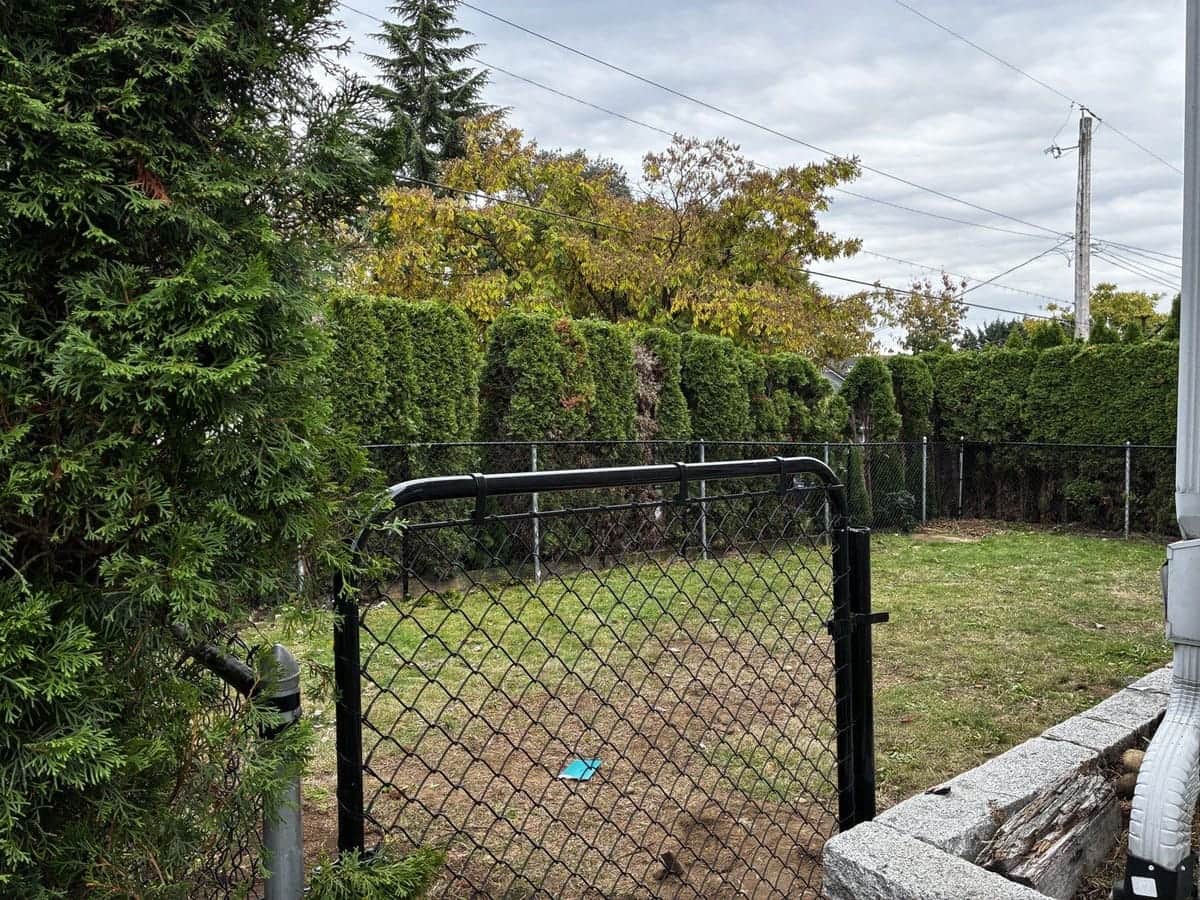
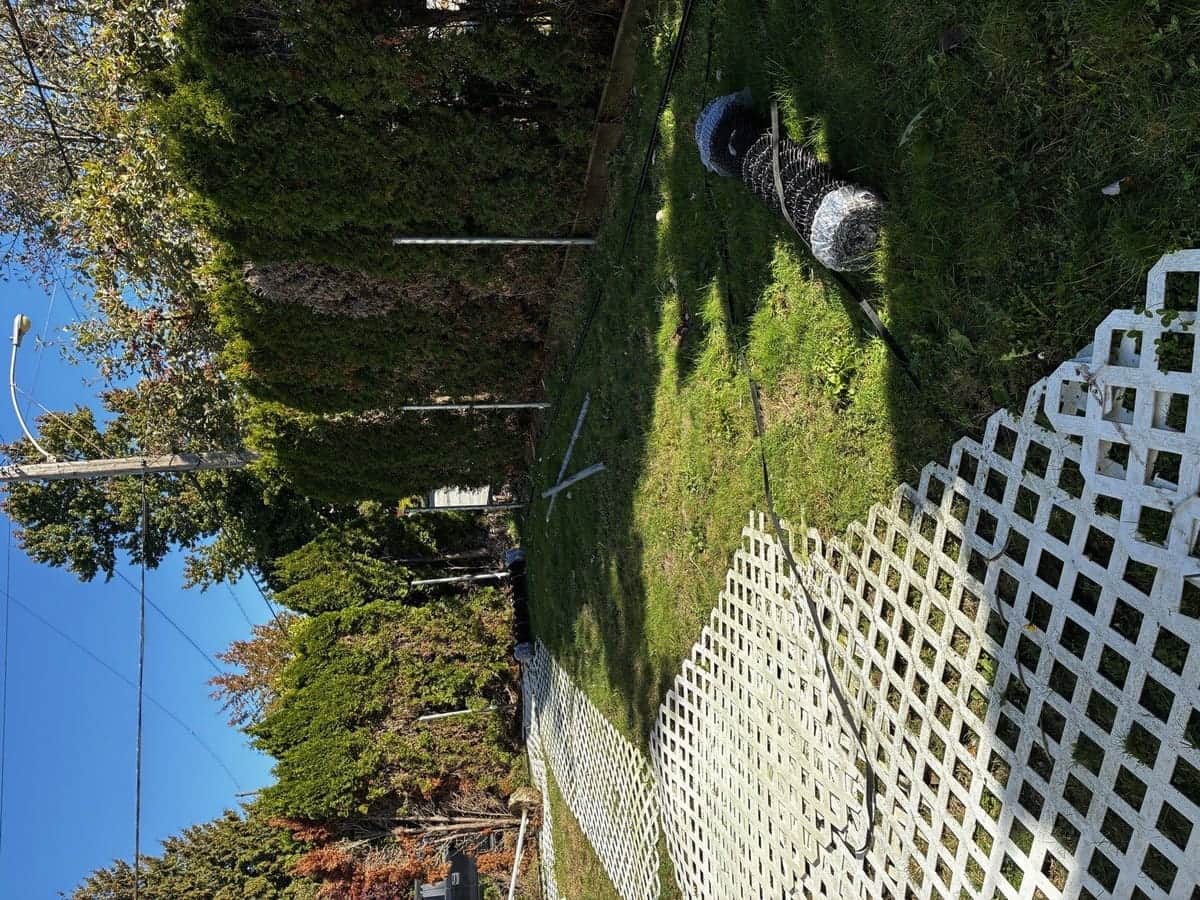
The Result
The property line is now clearly defined, the neighbor dispute is resolved, and the side yard went from an impassable thicket to open, usable space. The chain link gives full visibility and airflow without the maintenance burden of another hedge. The homeowner gained about 100 square feet of usable yard they didn't even know they had.