
Roof Pressure Wash & Moss Removal — Port Moody
Project Overview
A homeowner in the Heritage Mountain area of Port Moody had thick moss covering nearly their entire north-facing roof slope. The south side was cleaner but still had patches of algae discolouration. The home is surrounded by mature conifers that drop needles year-round, creating the perfect environment for moss to take hold. The homeowner hadn't cleaned the roof in six years and was worried about shingle damage. Their insurance company had flagged the moss during a routine inspection and recommended remediation.
The Challenge
Roof washing requires a fundamentally different approach than ground-level pressure washing. High pressure damages asphalt shingles — it strips the granules that protect against UV, which accelerates aging and voids warranties. Port Moody's Heritage Mountain properties often have steep roof pitches and limited ground access due to sloped lots and dense landscaping. This home had a 7/12 pitch on the north face — steep enough to require fall protection and careful footing. The gutters were also packed with decomposed moss and needles.
Our Solution
We set up proper fall protection with roof anchors and harnesses, then applied a sodium hypochlorite-based roof treatment at manufacturer-recommended concentration. The solution kills moss at the root level without any pressure needed on the shingles themselves. Heavy moss clumps were removed by hand with soft brushes before treatment. After a 20-minute dwell time, we rinsed with garden-hose pressure only — no power washer touched the roof surface. Gutters were cleaned, flushed, and inspected for damage. Downspouts were cleared of debris.
Materials Used
- ✓Sodium hypochlorite roof treatment
- ✓Soft-bristle brushes
- ✓Fall protection system (roof anchors, harnesses)
- ✓Garden-hose rinse (no high pressure)
- ✓Gutter cleaning tools
Timeline: 1 day
Before & After
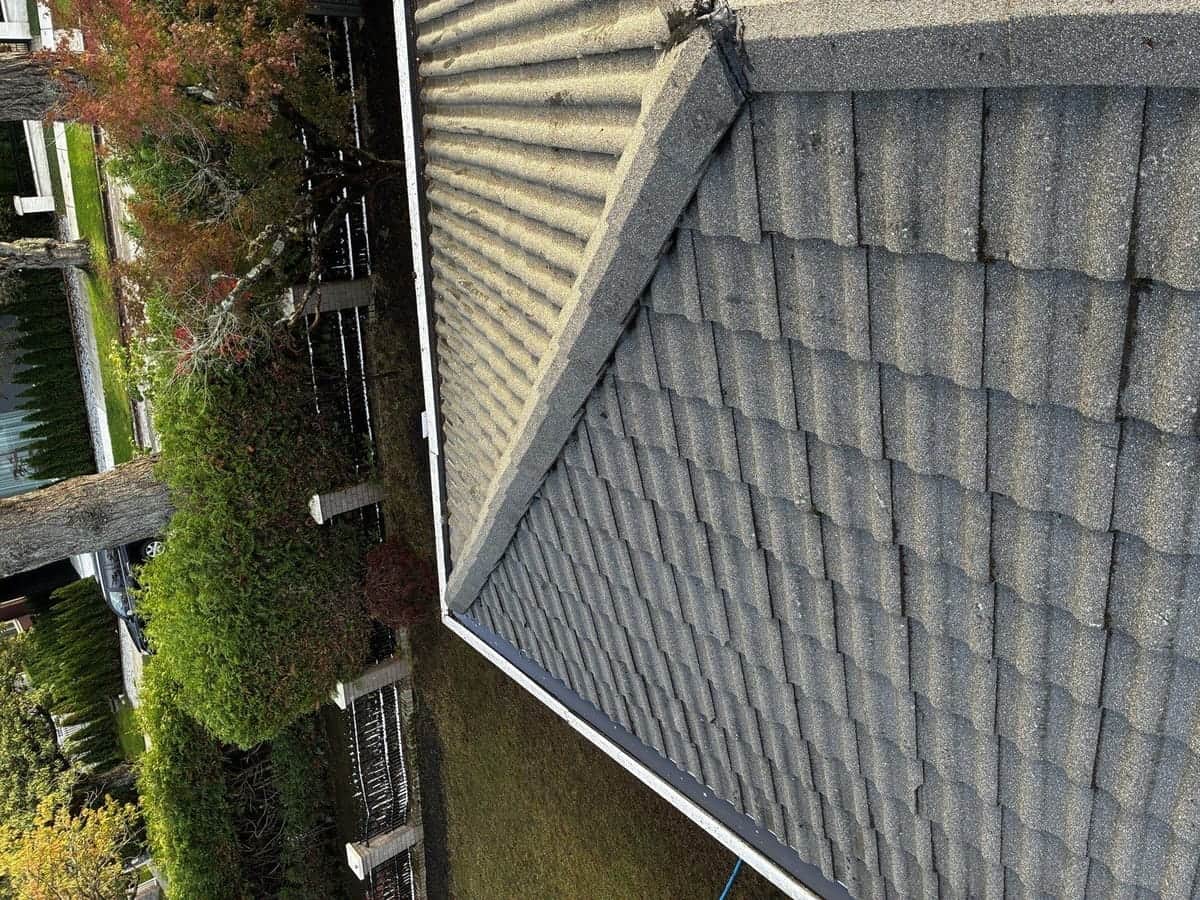
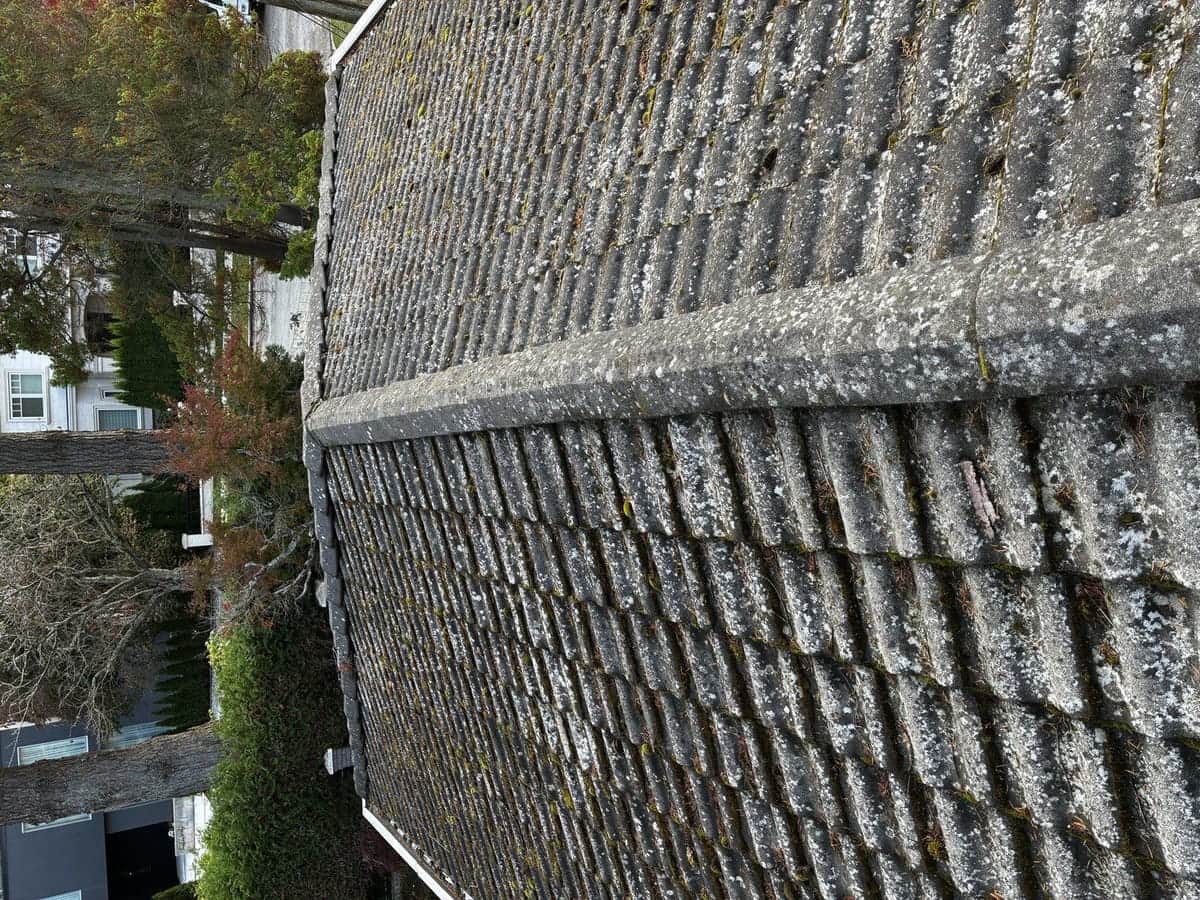
The Result
The moss was dead within 48 hours and the roof's original charcoal colour came back over the following weeks as dead material washed off naturally with rain. The insurance company cleared the flag after the homeowner sent our before-and-after photos. Clean gutters mean water actually reaches the downspouts now instead of overflowing at the seams.